How to Learn to Draw for Absolute Beginners
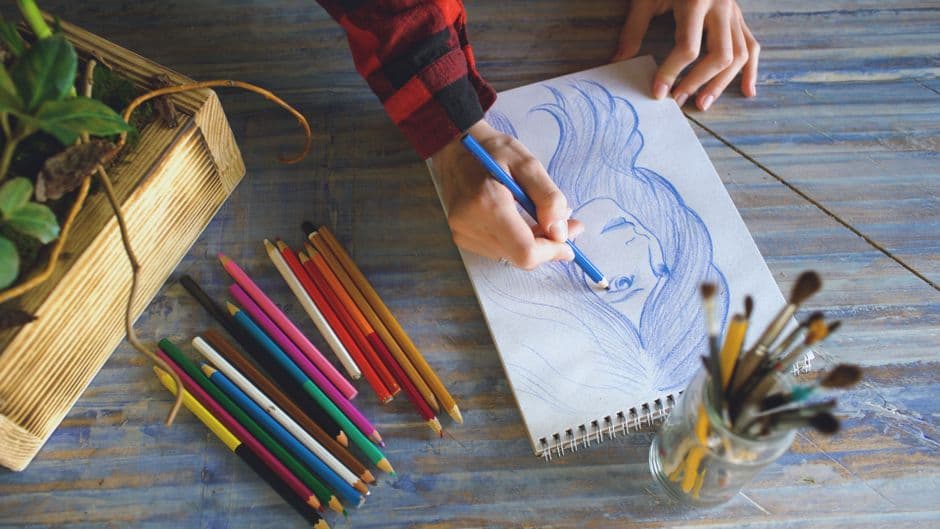
Learning to draw as a complete beginner might seem daunting, but with practice and the right approach, anyone can develop this skill. This guide will walk you through essential techniques, tools, and resources that can enhance your drawing journey. Whether you're interested in sketching, shading, or creating full compositions, the methods provided here will help you get started effectively.
📣 Здесь может быть ваша рекламаОставить заявку →1Method 1: Gathering Your Drawing Tools
- 1
Choose Your Drawing Surface
The first step is to select a suitable drawing surface. For beginners, a simple sketchbook or sheets of drawing paper will suffice. Look for paper that has a smooth texture; a weight of 100-200 GSM is ideal. Avoid flimsy paper that could tear easily. - 2
Select the Right Pencils
Start with a range of pencils, typically from H to B grades. An H pencil (hard) creates lighter lines, while a B pencil (soft) produces darker, softer lines. A set of 2H, HB, and 2B pencils provides a great starting point for beginners to experiment with shading and line quality. - 3
Grab an Eraser and Sharpener
An eraser is essential for correcting mistakes. Choose a kneaded eraser for precision, and a standard white eraser for larger areas. Don't forget a sharpener to keep your pencils fine-tipped, which helps create detailed lines and shading.
2Method 2: Basic Techniques
- 📣 Здесь может быть ваша рекламаОставить заявку →1
Start with Simple Shapes
Begin by practicing drawing basic shapes-circles, squares, and triangles. Focus on making them as accurate as possible, as these shapes are the foundation for more complex forms. Spend about 10-15 minutes on each shape, aiming for consistency and smooth lines. - 2
Practice Lines and Shading
Once comfortable with shapes, practice drawing straight and curved lines. Experiment with pressure to create varied line thicknesses. Next, try basic shading techniques, such as hatching and cross-hatching, to add depth to your shapes. A simple sphere can help you understand light and shadow. - 3
Understand Proportions
Proportions are crucial for realistic drawings. Use reference images to study how different elements relate to each other in size and scale. Practice drawing simple objects while keeping proportions in mind, noting how distance and perspective affect size and shape.
3Method 3: Observation and Reference
- 1
Draw From Life
Select simple objects around you, such as a cup or a fruit, and practice drawing them. Focus on observing light, shadow, and how forms interact in space. Spend at least 20 minutes on each object, trying to capture its essence without getting bogged down by minute details. - 📣 Здесь может быть ваша рекламаОставить заявку →2
Use Reference Images
Find photographs or artworks online that inspire you. When using references, try to replicate their styles or techniques. This will help you learn various approaches and develop your unique style. Choose images that vary in complexity to challenge yourself progressively. - 3
Join an Art Community
Engaging with a community can provide motivation and support. Look for local art classes, online forums, or social media groups focused on drawing. Sharing your work and receiving constructive feedback speeds up your learning process and connects you with fellow aspiring artists.
4Method 4: Developing Your Style
- 1
Experiment With Different Styles
Explore various styles of drawing, from realistic to abstract. Try using different materials like charcoal, ink, or digital media to see what resonates with you. Spend time experimenting-there are no right or wrong styles, just what feels authentic to you. - 2
Create a Regular Practice Schedule
Consistency is key to improvement. Set aside dedicated time each day or week for practice, even if it's just 20 minutes. Gradually increase the duration as you become more comfortable. Keeping a sketchbook to track your progress can motivate you and showcase your growth over time. - 📣 Здесь может быть ваша рекламаОставить заявку →3
Review and Reflect on Your Progress
Periodically review your earlier drawings to see how much you've improved. Reflect on what techniques worked well and which areas need more focus. This self-analysis will guide your future practice sessions and help you refine your skills further.
💡 Tips
- Stay relaxed while drawing to avoid tension in your hand.
- Use good quality materials-for example, a heavier sketchbook prevents smudging.
- Limit distractions during practice sessions for better focus.
- Have fun and allow yourself to make mistakes; it's part of the learning process.
⚠️ Warnings
- Avoid using low-quality paper or tools; they can frustrate your learning.
- Don't rush your progress; take your time to master each skill before moving on.
- Be cautious with online tutorials; always reference reliable sources. Beware of too much information, which can be overwhelming.
Frequently asked questions
How long does it take to learn to draw?
The time it takes to learn drawing skills varies greatly between individuals. With regular practice, some may start feeling improvement within weeks, while others might take months or even years to develop proficiency.
What drawing tools do I need to start?
As a beginner, basic tools include a set of pencils (2H, HB, 2B), a sketchbook, an eraser, and a sharpener. You can also add colored pencils or charcoal as you progress.
Can I learn to draw without formal lessons?
Yes, many successful artists are self-taught and have used resources like books, online courses, and practice to improve their skills. The key is to stay committed and practice regularly.
How can I improve my shading skills?
To improve shading, practice with different techniques such as hatching and blending. Observe real-life objects and how light interacts with them, and try replicating this in your drawings.
Is it necessary to draw from observation?
Drawing from observation is crucial as it helps you understand proportions, perspective, and how light affects different surfaces. It trains your eye to see details that are often missed.